
Tesamorelin Treatment for Safe Fat Reduction: Complete Guide for Modern Body Composition Support
By Apex Peptide Lab
In today’s fast-moving health and wellness industry, people across the world are searching for smarter and safer ways to improve body composition, support metabolic health, and reduce stubborn abdominal fat. Traditional weight-loss methods often focus only on overall body weight, but modern scientific research has increasingly shifted attention toward visceral fat reduction and targeted metabolic support.
One peptide that continues generating significant interest in medical research and peptide discussions is Tesamorelin. Originally developed as a synthetic growth hormone–releasing hormone (GHRH) analogue, Tesamorelin has become widely recognized in scientific and medical communities for its unique role in reducing excess visceral abdominal fat in specific clinical settings. The FDA approved Tesamorelin for reducing excess abdominal fat in adults with HIV-associated lipodystrophy.
At Apex Peptide Lab, we believe education is essential for customers researching modern peptide science and advanced wellness innovations. This guide explores Tesamorelin treatment, its mechanisms, potential benefits, safety considerations, scientific background, and why it has become one of the most discussed peptides in body composition research.
What Is Tesamorelin?
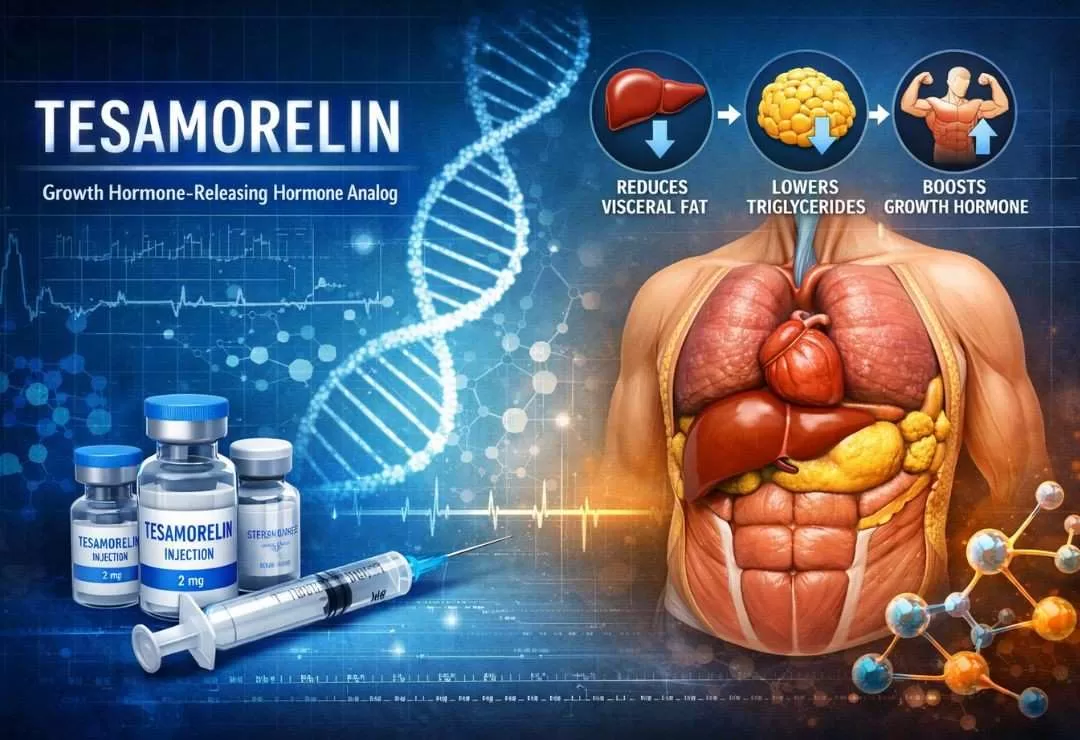
Tesamorelin is a synthetic peptide analogue of growth hormone–releasing hormone (GHRH). Rather than supplying synthetic growth hormone directly, Tesamorelin stimulates the body’s pituitary gland to increase the release of endogenous growth hormone in natural pulses.
Tesamorelin was initially developed to address excess visceral abdominal fat accumulation associated with HIV-related lipodystrophy. Clinical trials demonstrated meaningful reductions in visceral adipose tissue, leading to FDA approval under the brand name Egrifta.
Unlike many aggressive weight-loss approaches that target total body mass indiscriminately, Tesamorelin research has primarily focused on visceral fat — the deep abdominal fat stored around internal organs.
Understanding Visceral Fat and Why It Matters
Not all body fat is the same. Many people focus only on external appearance, but medical professionals increasingly recognize visceral fat as one of the most important metabolic health concerns.
Visceral fat is the fat stored deep within the abdominal cavity surrounding organs such as:
- Liver
- Pancreas
- Intestines
- Kidneys
High levels of visceral fat have been associated with:
- Metabolic dysfunction
- Insulin resistance
- Cardiovascular risk factors
- Inflammation
- Reduced metabolic efficiency
Tesamorelin became notable because research demonstrated reductions specifically in visceral adipose tissue rather than simply promoting broad overall weight reduction.
This distinction helped separate Tesamorelin from many conventional fat-loss compounds.
How Tesamorelin Works
Tesamorelin works through the body’s natural hormonal signaling pathways. It mimics growth hormone–releasing hormone, stimulating the pituitary gland to increase natural growth hormone secretion. This rise in growth hormone subsequently increases levels of insulin-like growth factor 1 (IGF-1).
The process generally involves:
- GHRH receptor stimulation
- Increased growth hormone release
- Elevated IGF-1 production
- Enhanced metabolic activity related to fat metabolism
Researchers believe this mechanism contributes to reductions in visceral adipose tissue observed in clinical studies.
Importantly, Tesamorelin does not function as synthetic HGH itself. Instead, it stimulates endogenous hormone release through physiological pathways.
Tesamorelin and FDA Approval
One reason Tesamorelin receives significant attention is its FDA-approved status for a specific medical use.
Tesamorelin became the first FDA-approved treatment indicated for reducing excess abdominal fat in HIV-infected patients with lipodystrophy.
Clinical trials demonstrated:
- Significant reductions in visceral adipose tissue
- Improvements in waist circumference
- Positive body composition changes
- Maintenance of lean tissue in some studies
Research cited reductions of approximately 15–18% in visceral fat during certain clinical trials.
However, it is important to understand:
- Tesamorelin is approved specifically for HIV-associated lipodystrophy
- Broader cosmetic or anti-aging use is considered off-label
- Research in healthy populations remains more limited
Why Tesamorelin Is Different from Traditional Fat-Loss Approaches
Many traditional weight-loss methods focus solely on reducing total body weight. Unfortunately, this often includes:
- Muscle tissue loss
- Water loss
- Metabolic slowdown
- Unsustainable crash dieting
Tesamorelin research gained attention because of its focus on visceral adipose tissue while potentially preserving lean body mass.
This selective focus on abdominal visceral fat has made Tesamorelin especially interesting in:
- Body composition research
- Metabolic health discussions
- Wellness optimization communities
- Peptide science markets
Potential Benefits Associated with Tesamorelin Research
Although results vary among individuals and broader uses remain under investigation, research discussions surrounding Tesamorelin commonly include interest in:
Visceral Fat Reduction
This remains the primary clinically validated effect associated with Tesamorelin. Studies showed reductions in deep abdominal fat in HIV-associated lipodystrophy settings.
Body Composition Support
Some studies and anecdotal discussions suggest improved body composition ratios through reductions in abdominal fat while maintaining lean mass.
Growth Hormone Support
Tesamorelin stimulates natural growth hormone release through the pituitary gland rather than replacing growth hormone externally.
Metabolic Function Research
Researchers continue studying how growth hormone signaling influences:
- Lipid metabolism
- Fat oxidation
- Metabolic efficiency
- Energy regulation
Scientific Interest in Healthy Aging
Although not FDA-approved for anti-aging, Tesamorelin is frequently discussed in longevity and healthy-aging research communities due to its interaction with the GH/IGF-1 axis.
Tesamorelin vs Synthetic HGH
One of the biggest misunderstandings involves comparing Tesamorelin directly with synthetic human growth hormone.
Key differences include:
| Tesamorelin | Synthetic HGH |
|---|---|
| Stimulates natural GH release | Supplies external GH |
| Uses pituitary signaling | Bypasses pituitary |
| Mimics GHRH | Direct hormone replacement |
| Pulsatile hormone release | Exogenous hormone exposure |
| FDA-approved for HIV lipodystrophy | Various medical indications |
Researchers often consider endogenous hormone stimulation physiologically different from direct hormone administration.
Safety Considerations
Safety remains an important part of any peptide discussion. Tesamorelin has been studied clinically, but like all biologically active compounds, it carries potential risks and considerations.
Reported side effects in clinical studies included:
- Injection-site reactions
- Joint discomfort
- Swelling
- Muscle pain
- Increased IGF-1 levels
- Glucose metabolism changes
Some sources also note concerns involving:
- Insulin resistance
- Diabetes risk
- Fluid retention
- Potential tumor-growth concerns in susceptible individuals
Because Tesamorelin influences hormonal pathways, proper medical supervision is important in approved clinical settings.
The Importance of Medical Guidance
Peptide science is complex, and individualized medical assessment matters.
Factors influencing peptide suitability may include:
- Existing medical conditions
- Hormonal balance
- Glucose regulation
- Cardiovascular health
- Current medications
- Metabolic health markers
Consumers should avoid viewing peptides as miracle shortcuts or replacements for:
- Proper nutrition
- Exercise
- Sleep quality
- Long-term lifestyle consistency
Tesamorelin and Modern Wellness Trends
The global peptide market has expanded rapidly over recent years. Growing consumer interest in:
- Longevity
- Recovery science
- Metabolic optimization
- Body composition support
- Performance enhancement
has increased visibility for compounds like Tesamorelin.
Online wellness communities frequently discuss Tesamorelin in relation to:
- Visceral fat management
- GH optimization
- Body recomposition
- Metabolic support
However, separating evidence-based information from marketing hype remains extremely important.
What Makes Safe Fat Reduction Important?
The phrase “safe fat reduction” matters because aggressive weight-loss approaches often create serious health risks.
Extreme methods may contribute to:
- Hormonal imbalance
- Nutrient deficiencies
- Metabolic damage
- Muscle loss
- Psychological stress
Modern peptide research increasingly focuses on targeted metabolic pathways rather than crash dieting or stimulant-heavy approaches.
Tesamorelin’s scientific interest largely centers on:
- Physiological hormone signaling
- Visceral adipose reduction
- Body composition support
- Metabolic function research
Tesamorelin and Lifestyle Support
Even within clinical studies, lifestyle habits still matter significantly.
Healthy body composition support typically includes:
- Balanced nutrition
- Resistance training
- Cardiovascular exercise
- Sleep optimization
- Stress management
- Long-term consistency
No peptide replaces foundational health habits.
Instead, peptide research often examines how compounds may complement broader wellness strategies under appropriate supervision.
Why Research Quality Matters
The peptide market has become crowded with suppliers of varying quality standards. Consumers researching peptides increasingly prioritize:
- Product purity
- Laboratory standards
- Transparency
- Secure sourcing
- Professional handling procedures
At Apex Peptide Lab, we understand the importance of educational transparency and responsible peptide discussions.
Tesamorelin in Scientific Research
Beyond HIV-associated lipodystrophy, researchers continue exploring Tesamorelin in additional areas including:
- Fat metabolism
- Liver fat studies
- Metabolic health
- Aging research
- Cognitive research
However, many of these applications remain investigational and are not FDA-approved uses.
Consumers should always distinguish between:
- Approved clinical indications
- Experimental research
- Anecdotal discussions
- Marketing claims
Misconceptions About Tesamorelin
“Tesamorelin Is a Magic Fat Burner”
False. Tesamorelin is not a miracle solution and does not replace lifestyle fundamentals.
“It Melts All Body Fat”
Clinical research primarily focused on visceral abdominal fat reduction rather than generalized cosmetic fat loss.
“It Works Instantly”
Clinical studies generally evaluated outcomes over many weeks and months, not overnight transformations.
“It Is Risk-Free”
Like any biologically active compound, Tesamorelin carries potential risks and requires informed consideration.
The Future of Peptide Science
Peptide science continues advancing rapidly as researchers explore:
- Hormonal signaling pathways
- Regenerative medicine
- Metabolic optimization
- Precision medicine
- Healthy aging strategies
Tesamorelin represents one example of how targeted peptide therapies may influence future metabolic-health approaches.
As scientific understanding grows, peptides may continue reshaping conversations around:
- Fat metabolism
- Hormonal balance
- Wellness optimization
- Personalized health strategies
Why Consumers Are Interested in Tesamorelin
Interest in Tesamorelin continues growing because it sits at the intersection of:
- Scientific validation
- FDA approval
- Body composition research
- Hormonal optimization discussions
- Modern wellness trends
Its unique position as an FDA-approved GHRH analogue contributes to ongoing attention within peptide communities.
Final Thoughts on Tesamorelin Treatment for Safe Fat Reduction
Tesamorelin continues attracting significant scientific and consumer interest due to its unique relationship with visceral fat reduction, endogenous growth hormone stimulation, and metabolic research.
Clinical studies demonstrated meaningful reductions in visceral abdominal fat in HIV-associated lipodystrophy settings, helping establish Tesamorelin as the first FDA-approved therapy for this condition.
At Apex Peptide Lab, we believe informed education is essential in today’s evolving peptide industry. Consumers researching Tesamorelin should focus on:
- Evidence-based information
- Safety awareness
- Professional guidance
- Realistic expectations
- Long-term wellness strategies
Peptide science continues evolving rapidly, and Tesamorelin remains one of the most discussed compounds in modern metabolic and body composition research.
Whether interest comes from scientific curiosity, wellness discussions, or metabolic research exploration, understanding the realities behind Tesamorelin treatment is essential for making informed decisions in today’s advanced peptide landscape.